

The End of Dance - Interview with Elaine Lam
The End of Dance is a series of texts that examines endings in dance. It offers a reflective space and platform for people to evaluate, digest and see how things have settled for them.
We often see writing and content that focuses on the before, the new and the next - this isn't a space for that. This is somewhere that looks at the aftermaths, the impacts and what happened in those end moments. The End of Dance will feature long form interviews with people alongside other features that have a specific relationship to the end / endings.
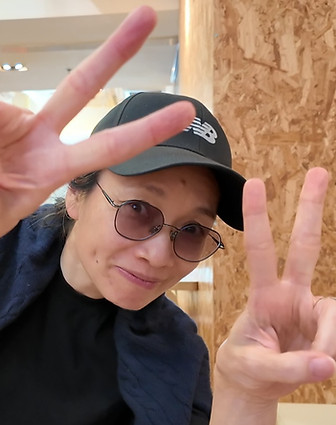
Elaine Lam
Elaine began her dance journey with Royal Ballet graded examinations before university, where she expanded into jazz and hip hop. After graduation, she taught jazz and later pursued a Master’s in Arts Administration at Columbia University, New York.
Returning to Hong Kong, she worked with major institutions including Hong Kong Dance Alliance and Hong Kong Ballet, and since 2008 has coordinated the Hong Kong Dance Yearbook, overseeing four editions and building its archive. In 2014 she joined the Hong Kong Dance Federation, becoming Assistant Executive Director the following year.
In 2015, she co-founded the Hong Kong Street Dance Development Association (HKSDDA), Hong Kong’s first charitable NGO dedicated to street dance professional development. Through flagship programs such as the HK Street Dance Championship, Theatre Development Program, school tours, and media projects, HKSDDA engages thousands of youth annually and has supported over 50 dancers in overseas training over the past decade.
IA: Can you introduce yourself and describe what it is that you do?
EL: The script says my name is Elaine and I’m the founder and General Manager of the Hong Kong Street Dance Development Association (HKSDDA). On top of that I am also a researcher on dance history in Hong Kong and freelancing on many other different arts projects.
IA: The general manager role, what does that mean? What are the things that you do?
EL: I create a new dance style called knock knock. What I do is keep knocking on people's door, knocking people back and knocking people’s heads [laughs]. The general manager role here is to gather the resources from government and from the commercial side; in terms of saying resources, it’s not only the money but all the different human resources as well. My role is getting resources and putting them together to make good use of them.
IA: What is your relationship to endings?
EL: I think the time you introduced this concept to me I started thinking about what's coming to an end on my side. The obvious one is the Flo project that finished in January 2026 and which I considered my dream come true. Whenever we talk about endings, a decade is a good marker to summarise what you've been doing. Last year was our (HKSDDA) 10th anniversary and Flo is a project that marks it, it's a milestone. I take it as a milestone of what I have been doing so far. It's good to have some reflection on this milestone and whether it really fits with that first objective when running this organisation. Or does it just fulfil a personal goal or a community goal? So when you talk about ends, this is a marker of reflection rather than an ending. I can now see another picture developing, another dream and another goal.
IA: How do you end an artistic relationship?
EL: How do I decide I should put a stop to the relationship? In my experience in the street dance field, because our organisation doesn’t have a lot of resources, my first approach is to think about the long-term relationship. But then whenever I feel I can no longer support this person emotionally then it's time to put a stop to it. I’ve got many different friends, but for those who I just feel that I cannot really handle them any longer, I'll just put a stop to it. That's on a very personal level. In terms of organisation, I talk with friends first if I invite somebody to work with me - I have a lot of screening. In Hong Kong, my committee members are selected, instead of by open application and after 10 years we've had three terms and we’ve had three different conveners and after each term we ask somebody to go or to come on board. For those who don’t really engage in our process or meetings, we say you don't have time and let them go. If our committee members are reliable, faithful and they really want to contribute something more to street dance then they are invited onto our board. I do have experience where I kicked somebody out, because at that time I felt I couldn’t support that relationship any more, so I just put an end to it. It was a very vigorous and unhappy process because that particular committee member had a good relationship with other committee members and they were of the same generation. If it was my emotional side and the development of organisation, if I compare these two things, I treasure my emotional side more. I said if that committee member did not leave then I'd leave. There's a Chinese saying, it's like a sign, there’s a time to come and a time to go. So just let go. That's my attitude.
IA: What was it like reaching the end of Flo? You said you've been building up to this for a decade. It's a year-long project and the biggest investment you've had from the arts development council. What did you feel at the end?
EL: Disappointed. Yeah, I will seriously confess it. I'm disappointed in a way because...it's probably in the process or there's some naivety or mismanagement that I didn't handle and it comes out with that result. I have digested for this for half a year and to a certain extent it's very personal. When something comes out that does not fit your aspiration, you get disappointed. But at the same time I wonder why I set that goal in the first place. My background is from ballet and the ballet background trained my mind and gave me exposure to the theatre side of things. This exposure led me to understand that a certain type of theatre practitioner in Hong Kong is considered "higher class" versus the street dancer who is often very grassroots. Street dancers don't often have a concept or they might have a very small concept and they have little to no admiration for the theatre setting. So I felt if there's an opportunity where I can bring street dance to the theatre and this is an opportunity for people to see that street dancers have got capacity, the creativity and they can reach the theatre side.
When I first saw Breakin’ Convention in Edinburgh, I felt like it was very well received. I visited Edinburgh in 2016, and the whole scene is very developed because they tour a lot already. So, I thought, if I can bring that model to Hong Kong, that will be something I can introduce - theatre to street dance. That was a nice first encounter and that was my first little dream. I was lucky at that time because I got some committee members who graduated from APA and they supported this idea so I kickstarted the whole thing. But then one friend – Rex – had some health issues and the whole path was just up to me, because there was no artistic people to really guide me. To say how to ramp this up or what direction I should go. It's lucky because the ADC (arts development council) doesn't have much money, so every time it's small scale and I just go for the small win. Then perseverance and persistence makes people think, OK there are some people doing that. On that part it feels less risky in terms of exposure to the wider industry problem as well as a protection of my own ego and aspirations. But. But there was an opportunity when we became a charity, because in Hong Kong once you become a charity there’s more chance to get more funding or sponsorship - due to matching funds and charitable status. We are trying to deal with the survival of the organisation, so I think with that capacity we can really try to attract big funding and expose us to wider sponsors and foundations so that they can support us more. This is more on the financial side. Thinking how I can structure the whole organisation as well as building something for Hong Kong. I just approach them and keep knocking on the door. I'm truly thankful for all the overseas artists who come to Hong Kong and trust me. I truly appreciate this bonding and relationships that we build.
But then in terms of artistic side, if something is underprepared and then you expose it to the public, everyone just asks, “Oh, what's your goal on artistic side?” But my side is more on the structural and administrative side, that pleasure is huge to me and I learned a lot. But when you ask why do I feel disappointed? In terms of the artistic side of Flo, it’s not mature enough and it's not thought through enough...but I kickstarted it anyway and I think this bravery is really something in Hong Kong. I tried, and that's a huge lesson for me. In terms of the organisational structure or the organisational development that's a huge success for me, because as an organisation, without full time staff, we can reach that far. That’s really something. On the administrative side I feel satisfied, but on the artistic side I still really struggle and am disappointed. I think I will answer your question with that.
IA: Why did you end your role at the Hong Kong Dance Federation?
EL: You're doing your homework la. I think there was some political parts, but that’s not the main issue. My boss really liked me and wanted me to be her successor. At that time she's 60 something, looking for a successor and she knows I graduated from my Columbia. But because of one incident, my former boss is actually like a mum (like me) and works part-time. The way she manages the whole thing, she thinks that the organisation is her baby. Then you can foresee what might happen. Once a founder thinks the organisation is their baby, it's hard to let go of something. That organisation has a lot of committees with an average age of 70s at that time. So, I think I really have to think if I stay there. I know I can really proceed to some possession of the role, get a stable salary and a lot of other things. But. I felt something, that she is not the one who could really help me out in a way, who could help me polish my skills because I knew whenever she's there, I can always hide behind her and hiding is boring. The day means I sit there and the things I have to deal with are the political things between teachers and the time allocated between teachers. I proposed some good ideas and she didn't mind me exploring something like setting up the street dance association. She's like, “OK I can let you do a lot of other things.” But on some critical points, she's there and I truly respect her way of doing things, she has to protect the organisation and the second thing is there were some incidents when some of the other committee members said "I'm not doing a good job...I'm not doing it well." Which is OK. The way my former boss taught me, it's OK, next time you'll be fine. I know she tried to comfort me, but at the same time there was another former chief curator from the Hong Kong museum and he really tried to explain to me what's going on. He let me think through the whole picture and then saw how I should react. This is what an experienced arts administrator should do and he became my role model. I thought, I really don't want to become an organisational mom, so I decided to come out and try to develop my own organisation. At that time the street dance association was in its second or third year and we’re getting regular funding from ADC. So I became a freelancer, not only supporting the street dance field, but other projects as well. So I left. I just like risky stuff.
IA: Can you talk about your role as Executive Editor and Coordinator of the Hong Kong Dance Yearbook? That has a very real sense of ending every year. What things did you notice during the project and how did ends manifest there?
EL: That's the most important project that I had the opportunity to engage in. Honestly. It started in 2007 - that's the beginning of YouTube and Facebook - and around that time ADC were trying to kick off the year book series. One in dance, one in drama, one in music and one in Canton opera. At that time no one knew how to do the research thing and my former boss who has got this big network just kicked me out into the world to do it and I didn't mind. At the time I got this project, I’d just given birth to my son and she said you don't have to go to work in the office, you can do it at your home. What I did was I kept collecting all the dance information in Hong Kong on any ticketed performance. I had to record all the ticketed performances in Hong Kong and then every two years we published a book that shows all these data. That was a very valuable experience for me because at that time I saw how the ecosystem of Hong Kong dance scene worked for 10 years...and there's still no change.
That became my basis to understand that I could help the street dance scene and I found an opportunity to enter this field. I understand why the things go like this and why APA graduate ballet teachers become so stagnant in their development. After 2000, ADC funding is stagnant. So everything, every year, is the same. It's a pity, even though I try to find some differences there, there's no difference. At that point we tried to ask people like Billy Chan and others in the street dance scene to write something. But the way they wrote was just about their own artistic thing and what's going on on their artistic side. I wanted them to write about the whole ecosystem or what’s upcoming in street dance, but they just turned their mind elsewhere. So I felt sad about that at the time. That was my base to understand the whole structure and fabric of the Hong Kong dance scene and that's how I survived. I’ve still got those data and because of that data I continue my story and research; two years ago Catherine Yau asked me to become a researcher about Hong Kong dance history.
I told you this before, I’m researching Hong Kong dance history from 1842 to 2017. That's a research work that's really fruitful and I can see how the Hong Kong dance scene transforms and it explains why my fprmer boss was like that. I've got a full picture about the people and the Hong Kong dance scene. I’m coming to the end of that research but I want to do something more based on my data. That will be another story.
IA: What was 2025 like for you in terms of dance? A perspective on Hong Kong. Was it a good year? Was it in good health?
EL: I was so engaged with the Flo project I was not really aware, but let me compare it with 2015, the time that we kickstarted the street dance association. In 2015 all the street dancers had a lot of activities underground, there was a lot of participants, a lot of good commercial sponsors and a lot of youth centres supported street dance activities. I remember it was just everywhere. Everywhere. It was flourishing. But why did we want to make an association? At that time we don't have...we call it individualism. Everyone thinks their style is the most important. But to me, that's not good for funding and it’s not strategic enough to knock at the door and ask for bigger funding. In terms of street dance styles and the street dance field, there was definitely a growth in the number of schools and government support. People could recognise us as a team that can complete a project in a nice way and make a financial audit. I think that's the major difference between 2015 and 2025. The Flo project is the biggest funding that street dance has ever had in Hong Kong. In the other field, when I do the research...I had a nice talk with Catherine about the late 1980s when that British guy - Peter Brinson - set Chinese dance, ballet and contemporary dance as the three pillars of Hong Kong dance. From then on, till 1997, it's still the same in terms of structure. The proportion of money each dance style receives is more or less the same. The tricky part is that they asked us to complete this record to 1997, the year before the handover, after that I know there's a lot of vigorous restructuring on the funding side but basically the three pillars never changed. The number of kids going to RAD exams is still hitting 20,000 every year, but I did not see other fields with any big changes.
IA: How do you consider your own archive? What do you think your legacy will be?
EL: I write a lot. My personal diary is where I keep my own record, but because of reports and funding requirements and knowing that's how funding bodies consider an archive, I put a nice archive on our website. The way we present to the public is that we are reliable. My personal side is where I keep a lot of thoughts about the whole scene of Hong Kong dance, why I chose street dance instead of other styles and why I keep supporting youth. I keep asking these questions but I’ve kept all these dialogues to myself, but the public can look at my website.
IA: I’ve had a look at your website and you’ve spoken about: unsuccessful funding applications, a trip to Open Your Mind, the very first performance of The Box, an open letter to the Executive Director of Cloud Dance Theatre, but you’ve not posted since the end of 2024.
EL: That’s my personal blog and I’m just too lazy. Honestly. Sometimes I really want to share thoughts about the dance scene, not just the street dance scene. But once I got into a lot of other research then I have to give that my energy and put my writing on the side. So I haven't really continued on that. I'm not good at sharing my personal blog because there’s a lot of curses in there. A lot. I never swear in front of people, but I curse a lot in the blog. To some extent, to keep your role or from 2024...two, three or four years before...it was only then I started feeling that I am a leader. Before that I never saw myself a leader. I was a coordinator only. But once I felt that identity change and I'm the only one who could lead, from then on I feel a lot of weight in what I say and what I do. So I've become careful in writing things on IG and other places. From that point I just don't really want to share much about my thoughts.
IA: What was it like at the end of your Masters in Arts Administration from Columbia?
EL: I think that's a really critical moment in terms of designing my career path. Columbia is really expensive and my mom always said it's not a good investment because I will not really earn...but anyway...deciding to go to Columbia is one thing and I will answer why I chose arts administration instead of being a biologist because my first degree is in biology. I really wanted to study marine biology, but at that time my tutor, the coach in the dance society at university, said because I’ve got a ballet background, it's good to become a tutor. I’ve got technique, I can spin, I can split, I can jump and I have a lot of basic knowledge about dance compared with a lot of the dance students or members in dance society. A lot of them did not dance before, they just copied singers from MTV and they did not have traditional dance training. My splits or spins were just OK and said why don't I try to become a tutor. So after graduating I begged my mom to become a dance tutor and back then it was a very low salary. I said to her, just two years. Two years only. I told my mom just two years, trying to do something I like. It’s just two years, but now it’s 20 more years [laughs].
From that experience, it’s the first time I really got into the dance world in terms of the operations side because my coach is a dancer from the TV station, a dance member of TV station and he thought he did something important by inviting a university graduate student to work for him. But the consequence was...all the admin was on me and it’s the first time I encountered the operational side of a dance studio. Obviously as a fresh graduate I made a mess and lost him a bunch of money in a show. It's funny when I say it like that, but that experience and that encounter makes me think, if you know something about management, could it be better? At that time my mom never allowed me to become a dancer because dancers cannot have a long career. My mom said no matter what, you have to finish your RAD exam. So I finished my advanced exam when I was 17 and she said don't go to APA, you have to go to university. I finished my RAD exam, kept studying and enrolled myself into the one of the university’s in Hong Kong. At the back of my mind is, if I cannot become a dancer – but I really like dance – and I really like seeing people dance, I like to see it when people enjoying it in the moment and really become themselves. I really love to see that moment. If I can learn some management thing, I could do something. I could never have been the front one, the one on stage. So I decided to become arts administrator.
At that time (2000) there's no arts administration course in Hong Kong. The first chief executive of Hong Kong said he's going to build West Kowloon and after hand over in 1997, he had to set a five year plan. West Kowloon was one part of his five year plan and he estimated that West Kowloon can absorb a lot of arts administration - the capacity of arts administrator would be as much as the LCSD. I think at that point I picked arts administration. I tried to apply to Columbia, but because my marks in the GMAT, you know go when you go to US you have do a public exam and I got really low marks on it; but at that time because of 9/11 the number of overseas students had dropped and Columbia needed the money. So I got in. I was really happy because Columbia is a really good school, the curriculum part of it is in Teachers College and part of it is conducted by the business school in Columbia. So I can go to learn about copyright law from Columbia law school and I’m like, wow. I'm thinking I'm on top of the world and once I graduate I could go back to Hong Kong and work in West Kowloon [laughs]. The time was 2005 and I really thought I could come back to work in West Kowloon and prepare myself to become a super manager in a big company. At that time, I thought my expensive degree will bring me to that status, that type of circle. That's how I got into Columbia.
IA: Is there anything that you've not spoken about in terms of dance or endings that you want to mention?
EL: Can I talk about this? The end of ballet. I seldom really publicly say I hate ballet because I've trained in ballet, but I think the environment of local ballet schools is toxic. I'm from one of the most prestigious ballet schools in Hong Kong and I got many performance opportunities; it’s a big school and you get a lot of invitations, so you can dance here and there. Gloria and Agnes were my buddies at the time. But then the toxic part is I feel the hierarchies of the ballerina and the discrimination on your physical bodies in ballet. There’s so many biological things that you cannot control about a body, but they make us take it as an authority that everyone should follow. At that time, during my teenage years, as a good girl I followed and we believed what they said - we believed we are artists. No matter if it’s that prestigious school or APA or in Hong Kong ballet, they just kept presenting this idea - ballet is art, you get into it and you become an artist. You are this high class thing. Another toxic part is at that prestigious school there's a lot of rich kids. You can imagine, I think that's still normal, right? At the same time when we are teenagers we don't have that kind of serious comparison. We're just friends. But then a lot of teachers in that school ask you, in front of all your classmates, how many tickets did you buy to the school show? If I say, my mom is not free, they say why? I said I got two tickets. “Why don't you get more? You should get more.” If one of the daughters is the daughter of some local celebrity they always put her in the centre. Things like that. When I would go out with my university friends, I just felt that they danced as they like and don't have this hierarchy. They never cared about turns, they care if they are looking cool or not and enjoyed the music. They think that's fun, that's cool and I feel a lot of energy. I just took ballet seriously. I said no, you should split like this, you should stretch. At that time I just felt “dance should look like that”, it should be splits, it should be traditional, you should train the muscles and you should have nice posture. But when I got into that new circle of friends, who're relaxed and loved dance the same as I loved ballet - I realised I'd got something wrong with my idea about ballet and about dance.
I did ballet from Monday to Sunday...I danced every day but I never studied. Except for the RAD exam – for those two years I really studied. I felt that my world view was so small, particularly when I went to United States, because at Columbia everyone will speak out, everyone will have idea and everyone's got opinion. At that time, I remember one class mate asked me about Hong Kong. I said Hong Kong is good, Hong Kong got ADC, Hong Kong got LCSD who support us very much and I felt patriotic. But then they asked a question about how's the GDP and percentage of investment from government into arts and things like that. I couldn't answer because I didn't know about the proportion of government funding. I had no idea and from my classmate asking that question my world felt really small. From then on, I just started reading a lot, that's where my reading habit comes from. Until I really went out to see other sides of the world and I’ve got a judgment, it helped me decide which field I should support. That's why I decided to become an arts administrator for street dance. I know street dance is developing and they don't have the social capital compared to ballet and other dance scenes. That's why through this association I can build some foundations for them.
IA: It's the end of the world. We're in the end times. If you could have a last dance with two people, who would they be? What dance would you do? And why are you choosing them?
EL: The first one is definitely my husband, but in terms of the kind of dance style, that's very tricky because whenever I ask him, can you dance with me? He says "I'll vomit when I turn." So I say, you sing and I will dance. That's the first one. The second one, that's tricky. The second one is my mom or dad. My dad is 90 years old now and I know very little about him. He's got dementia and cannot really share things anymore, but I really love touch. So if I have to choose now, then I would like to dance with my dad in whatever dance style he wanted.
IA: What is the best ending in dance that you've ever experienced?
EL: Ending? I don't know. Whenever people ask me what is my favourite moment of dance, it’s the time a dancer dances with real enthusiasm in their own dance, when I feel their eyes sparkle and they're really engaging with us. But the ending...the best ending is a moment when my old committee members were standing next to me and we bowed to our audience. Last month we did the 10th anniversary of the street dance championship and I felt their support. I felt together and that's how we build a community. The bonding with my members has helped build this thing up. That's the best ending, I really liked that ending.